Ko Shamo Chicken – Japanese Small Game Fowl
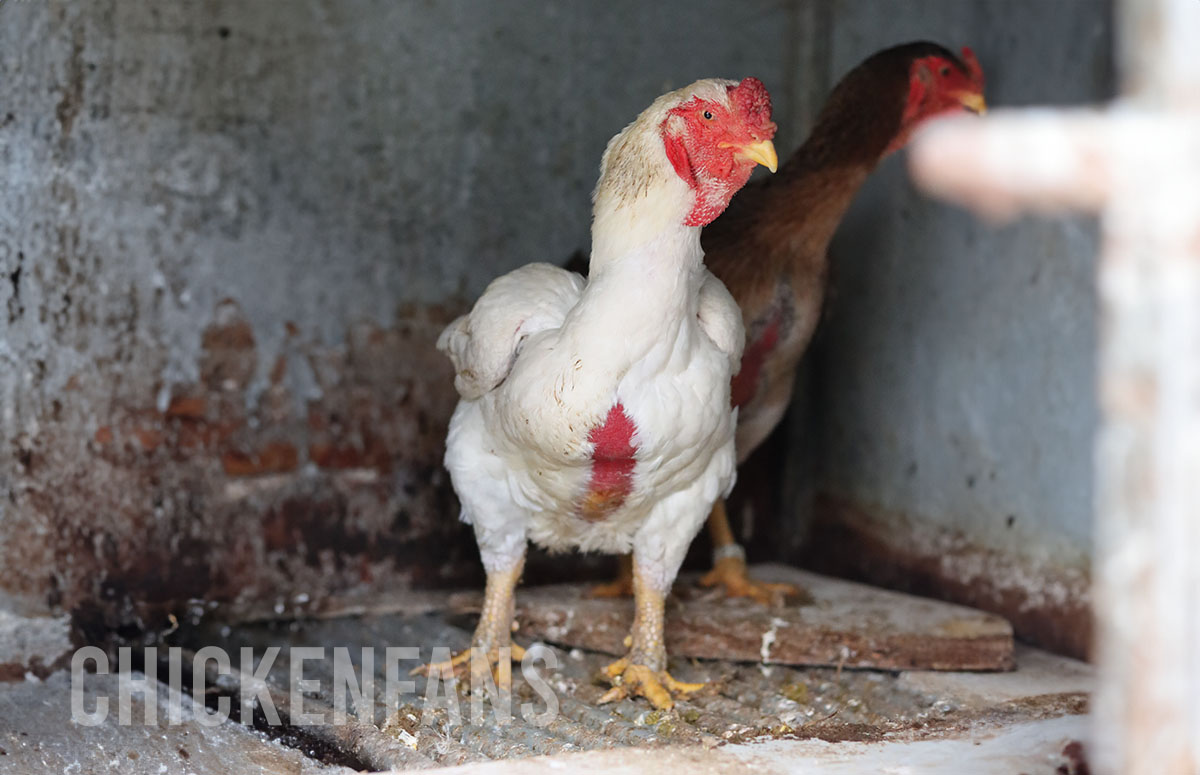
The Ko Shamo is Japan’s compact gamefowl. Think of it as the Shamo’s pocket-sized cousin: short, upright, muscular, and brimming with attitude. Despite its small frame, it carries itself like a giant: neck arched, chest out, and eyes that mean business.
The Japanese word Shamo (軍鶏) means “fighter,” and Ko (小) simply means “small.” So Ko Shamo literally translates as little fighter.
Some takeaways:
- Japanese dwarf gamefowl, part of the Shamo group (Natural Monument family)
- Very small size: ~1.0 kg roosters, ~0.8 kg hens
- Upright stance, muscular build, short and tight feathering with bare breastbone
- Pearl eyes, walnut or pea comb, thick red face skin
- Roosters will fight, extremely combative with each other
- Brought into Europe in the 1970s as true-breeding bantams
| Eggs | ~20 or fewer per year |
| Egg Color | White to cream |
| Egg Size | Very small |
| Weight | Rooster ~1.0 kg; Hen ~0.8 kg (Japanese standard) |
| Hardiness | Hardy |
| Temperament | Very tame with humans, extremely aggressive toward other males |
| Beginner-friendly | No (easy to tame, but very hard to manage roosters) |
| Color | wheat/wheaten, silver-wheaten, black, white, red-porcelain, and others |
Characteristics
Stand a Ko Shamo on a perch and you’ll see why breeders call it the little bulldog.
Despite its size, the bird looks imposing:
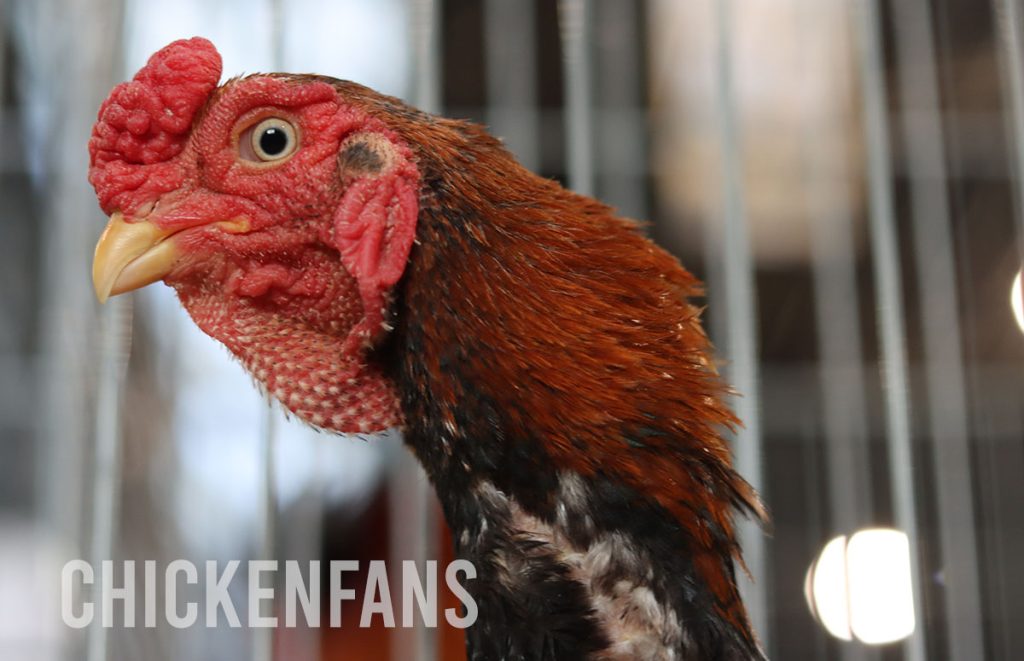
- Short, broad head with heavy brows and thick red facial skin
- Walnut or pea comb, tiny wattles, and strong yellow beak
- Pearl-white eyes in adults
- Extremely short and tight feathering, so the breastbone often shows bare
- Shrimp tail carried tight against the body, with short sickles overlapped by the under-feathers
- Shoulders set high, wings short, closing tight to the body.
Remark that the correct Ko Shamo should have almost no wattles, just a tight, red face and throat skin. However, larger wattles still appear often.
The breed is well-balanced: length of neck, legs, and body each roughly one-third of the total. That geometric look is part of the Japanese aesthetic standard.
Open wings
Traditionally, the Japanese Ko Shamo was bred with open wings: a visible gap in the wing closure, combined with very short, hard feathering. That’s exactly how they were imported into Europe. In the West, however, some breeders allegedly disliked the look and saw it as a skeletal fault. They crossed in other blood to close the wings. The trade-off was that the feathering became softer and longer.
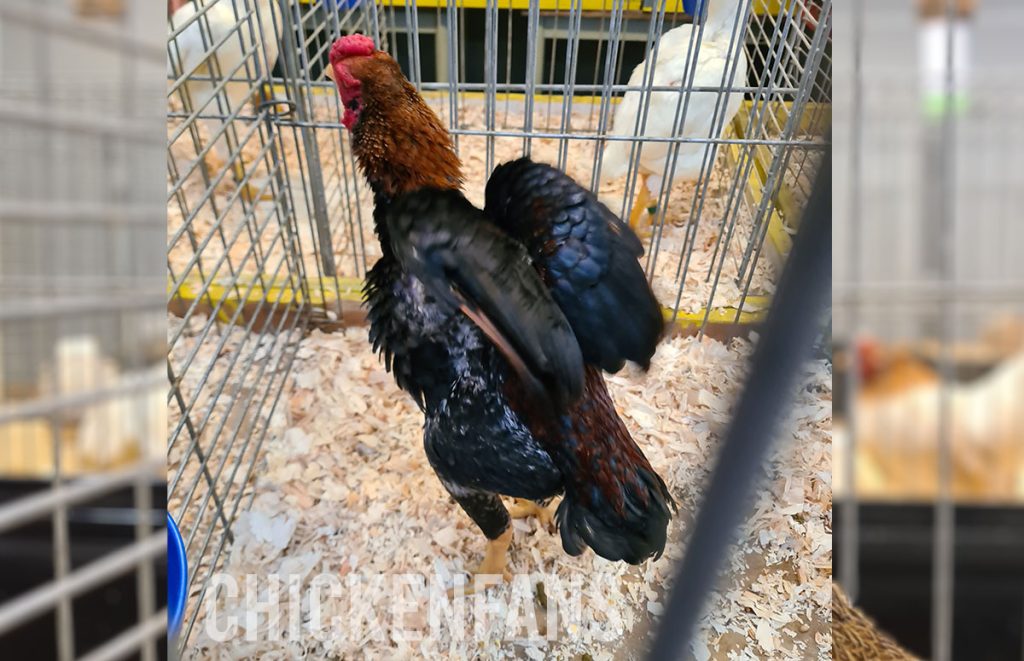
Later attempts tried to fix this, with mixed success. Since 2015, open- and closed-wing Ko Shamos are judged equally in shows, but purists still argue the true Japanese style is the open-wing bird.
Name
As with the O-Shamo, “Shamo” is the group name, while Ko Shamo (小軍鶏) is the official small form. Dutch sources note this was already regarded as an ancient breed in Japan, even if the exact origins are murky. What’s certain: the name simply means “little fighter.”
Egg Production
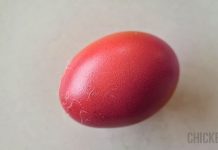
Hens lay very few, very small eggs, often only during a short period each year. Shells are white to cream.
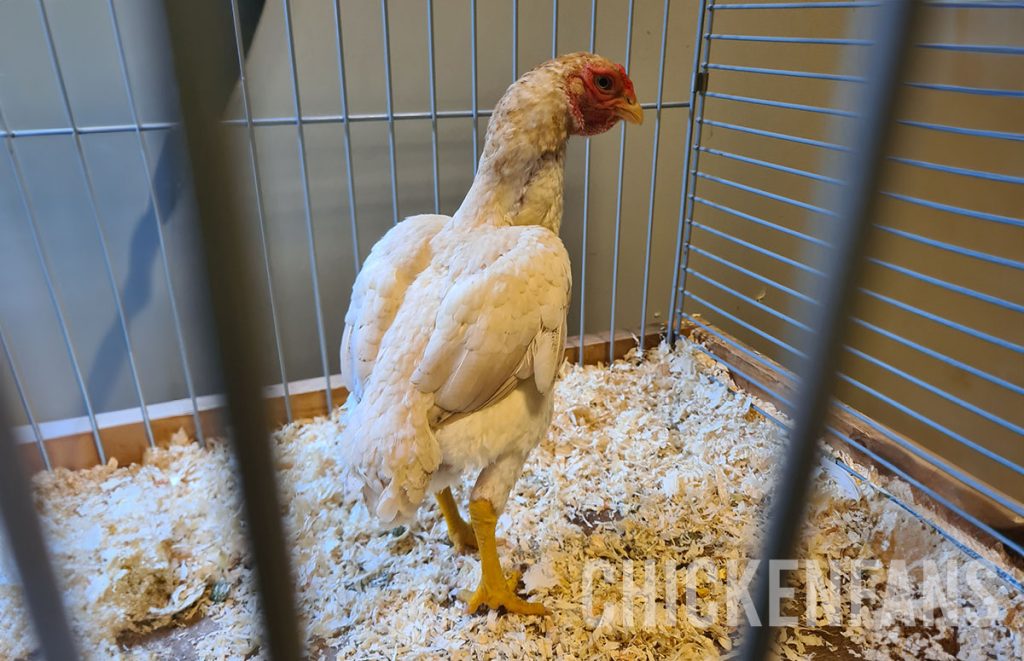
Breeders tend to value them as type birds rather than for eggs; the hens are kept to preserve the lines.
Personality
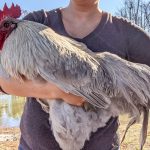
Here’s the quirk: with people they’re sweet, even tame to the point of being lap chickens. They also can’t fly, so there is no need for high fences. Breeders in Europe report that the Ko Shamo can be extremely trusting, even friendly. They don’t run away when they see you coming and they are easy to catch.
With each other? A different story.
Roosters fight hard, and unfortunately they keep going until one gives out. Juvenile cockerels start brawling as early as 6 weeks old. That’s why breeders often house them strictly in pairs or trios, never in groups.

Colors
Ko Shamo are recognized in several striking colors, wheaten, silver wheaten, black, white, red-porcelain mottled, and other. The U.S. APA standard of perfection only lists the Wheaten color of the Ko Shamo in the AOCCL class.
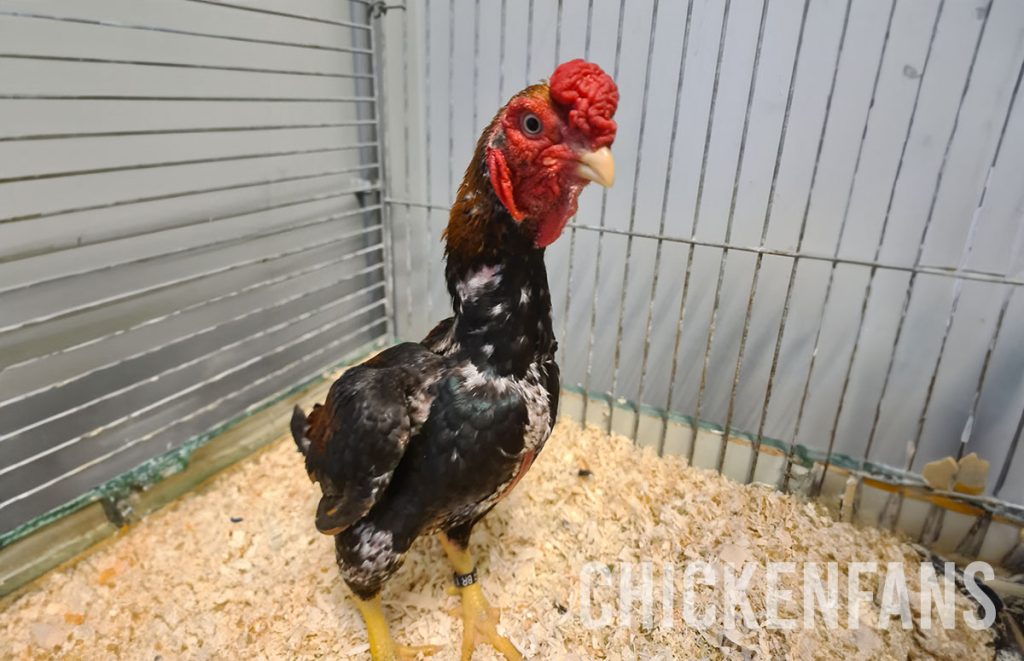
At shows, the variety of colors makes comparisons tricky, but just like with O-Shamo, type always outweighs paint. Judges look for carriage, feather tightness, balance, and expression first.
History
The exact origins inside Japan are fuzzy, but the Ko Shamo was considered old even in Japanese records. It belongs to the seven-breed Shamo group protected as Natural Monuments.
- Edo period (1603–1867): Shamo birds arrive in Japan from Siam/Thailand and the Ko Shamo emerges as a miniaturized fighting type
- 1941: Shamo group protected by law as cultural heritage
- 1970s: Ko Shamo exported to Europe as true bantams (bantams that have no large fowl counterpart), where they gained a following among breeders
Unlike O-Shamo, Ko Shamo never played a role in Western meat breeding. It was, and still is, a specialist show bird.
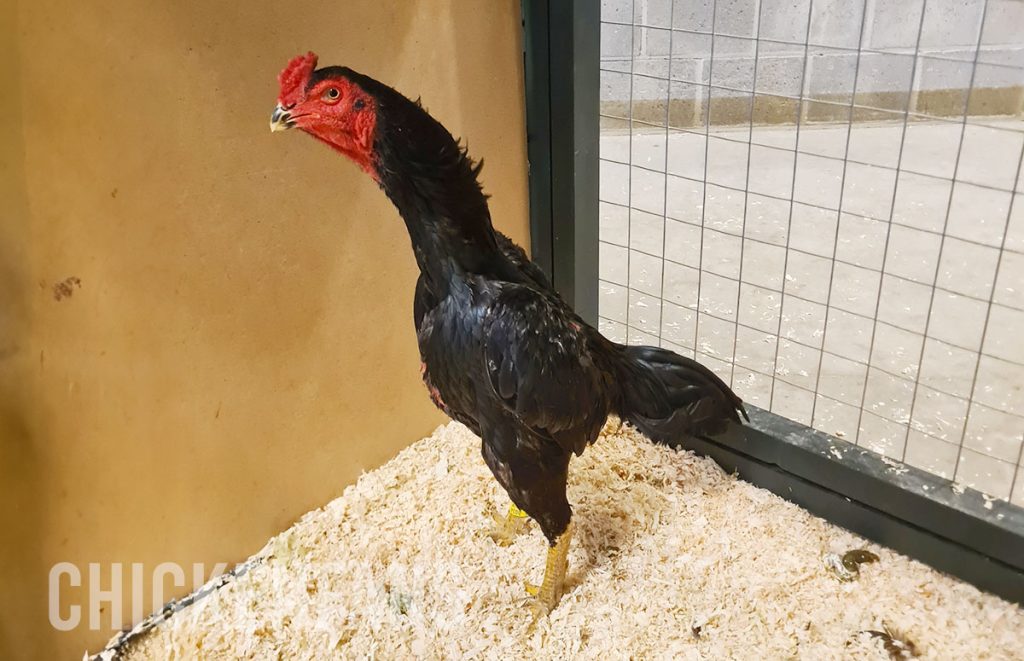
Genetics
Microsatellite DNA studies in Japan cluster Ko Shamo very close to O-Shamo, suggesting they share a recent ancestor. Some authors (Osman, Sekino, Nishibori, Tsudzuki, 2006) even proposed that Ko Shamo might be a dwarf form of O-Shamo.
This view contrasts with earlier blood-protein studies, which did not find them genetically similar. Still, modern DNA work leans heavily toward a close connection.
Summary
The Ko Shamo is Japan’s tiny but mighty gamefowl. With its short stance, hard feather, shrimp tail, and bold face, it looks like a miniature gladiator. Expect almost no eggs, but plenty of personality: tame with humans, fiery with its own kind.
If you want a living piece of Japanese culture in bantam size walking in your backyard, the Ko Shamo delivers.
If you want to find out more about Japanese game fowl breeds, check out our articles on the Yamato Gunkei chicken, the Shamo, the Kyshiu Chibi, the Yakido, the Shoukoku chicken, or the Ko Shamo.