Kadaknath Chicken: An Indian Black Beauty
Have you ever heard of the Kadaknath chicken? This unique breed is one of the rarest chicken breeds known for its dark color. But unlike its famous black counterpart, the Ayam Cemani, the Kadaknath is not as widely recognized.
- Kadaknath hens lay 80 eggs yearly
- Native to the Madhya Pradesh region in India
- Praised for its culinary qualities
- Unique black skin and bones
| Eggs | 80 eggs per year |
| Egg Color | Brown with pink tint |
| Egg Size | Small |
| Weight | 2.5 – 4 lbs |
| Hardiness | Cold and heat |
| Temperament | Friendly and calm |
| Beginner-friendly | Yes |
| Color | Black with green sheen |
Characteristics
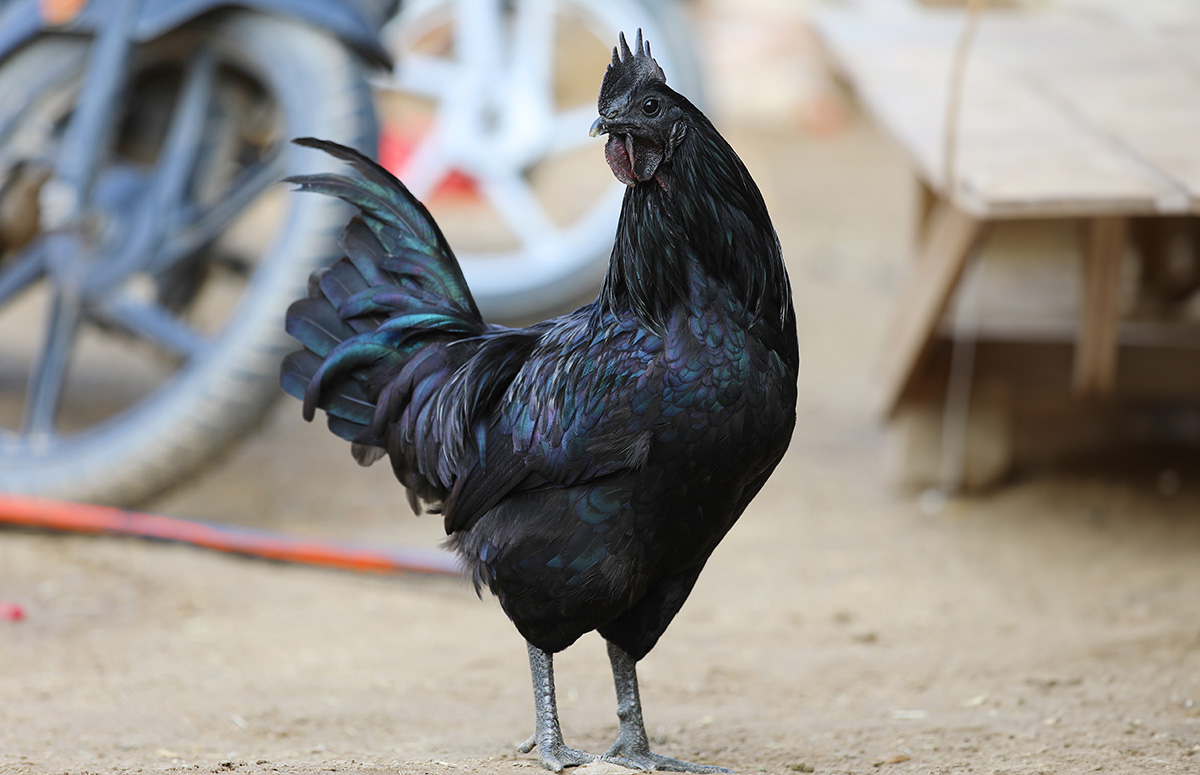
The Kadaknath chicken isn’t your typical barnyard fowl. It almost looks like a true marvel of nature with its completely black color.
Its deep black coloration extends beyond the feathers to its skin, beak, legs, bones and organs.
While the Ayam Cemani might be the most famous completely black chicken, the Kadaknath holds its own for more culinary reasons.
Its meat is believed to be low in fat and cholesterol, high in amino acids, and offers excellent health benefits.
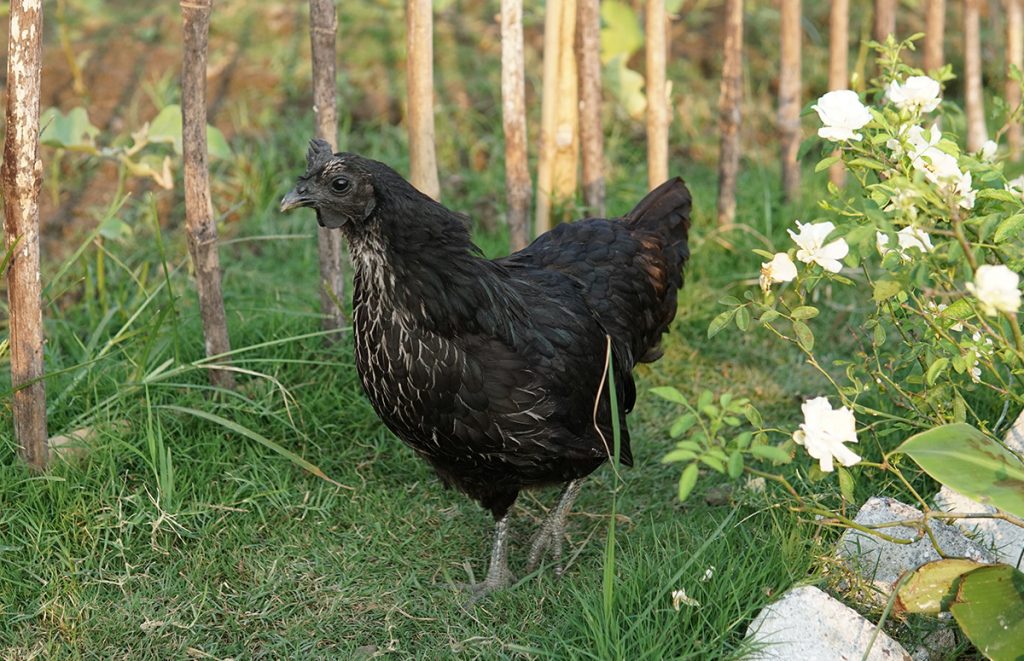
This blackness results from a genetic condition known as fibromatosis, which is also seen in Silkies, Ayam Cemani, and other completely black breeds.
Its glossy feathers sometimes exhibit a greenish sheen under sunlight, especially in roosters, adding a touch of shimmer to their presence.
Eggs
Kadaknath chickens are not the best egg layers; they are mostly known for their exceptional meat quality. The hens are moderate layers and lay between 80 and 100 eggs yearly. That’s only one to two per week.
The eggs are small in size, around 30-35 grams each. They have a brown color, and some may have a pinkish tint.
The hens are poor setters, they rarely go broody, which is a trait often seen in meat chickens. They don’t have the desire to sit on their eggs and hatch them.
As such, the Kadaknath chicken is mostly used as meat or exhibition chicken, not for eggs.
Meat
The Kadaknath chicken is not your ordinary chicken; it’s a nutritional superstar, famous for its nutritional value.
What makes Kadaknath chicken really stand out is its protein content. It’s way higher in protein than the usual chicken, and it has less fat and moisture.
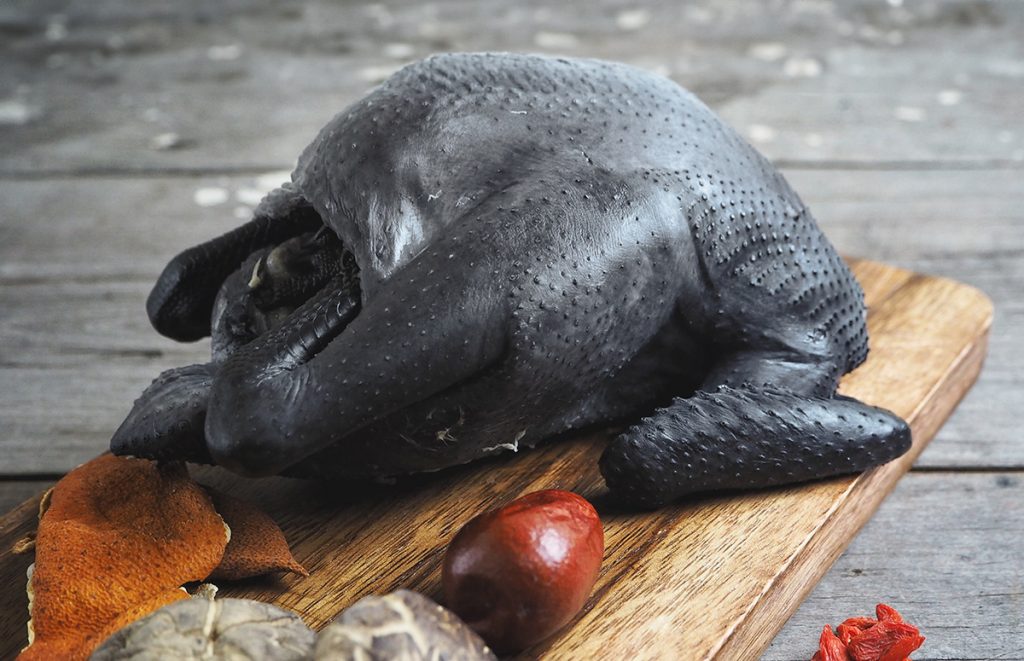
Nutritionists tell us that this chicken is loaded with more types of amino acids than regular broiler chicken.
These amino acids are like the building blocks for our bodies, making Kadaknath a great choice for keeping you strong and healthy.
But there’s a downside to this nutritional value.
With more people wanting to try this delicacy, the breed has declined in numbers.
To save the Kadaknath from extinction, the Indian government started a breeding program by giving 500 families financial support to raise these chickens.
Temperament
Kadaknath chickens are known for their hardy and resilient nature.
Originating from the rugged terrain of Madhya Pradesh in India, they have adapted to survive in challenging environments.
This resilience makes them less susceptible to common poultry diseases and able to thrive in various conditions.
They are often described as alert and active and have a strong survival instinct. However, they are not aggressive and can coexist peacefully with other breeds if given enough space.
While they might not be as affectionate as other breeds, their independent and self-reliant characteristics make them a fascinating breed to keep. Their ability to forage and look after themselves greatly is appreciated by small-scale farmers and chicken keepers who admire their low-maintenance aspect.
Summary
The Kadaknath chicken, originating from Madhya Pradesh, India, is famous for its unique black coloration, affecting everything from its feathers to its internal organs due to fibromelanosis.
The breed stands out nutritionally, being high in protein, iron, and essential amino acids, while low in fat and cholesterol.
Despite being less famous than the Ayam Cemani, it faces challenges due to overconsumption, leading to a decline in population and conservation efforts.