Shamo Chicken – Japanese Game Fowl
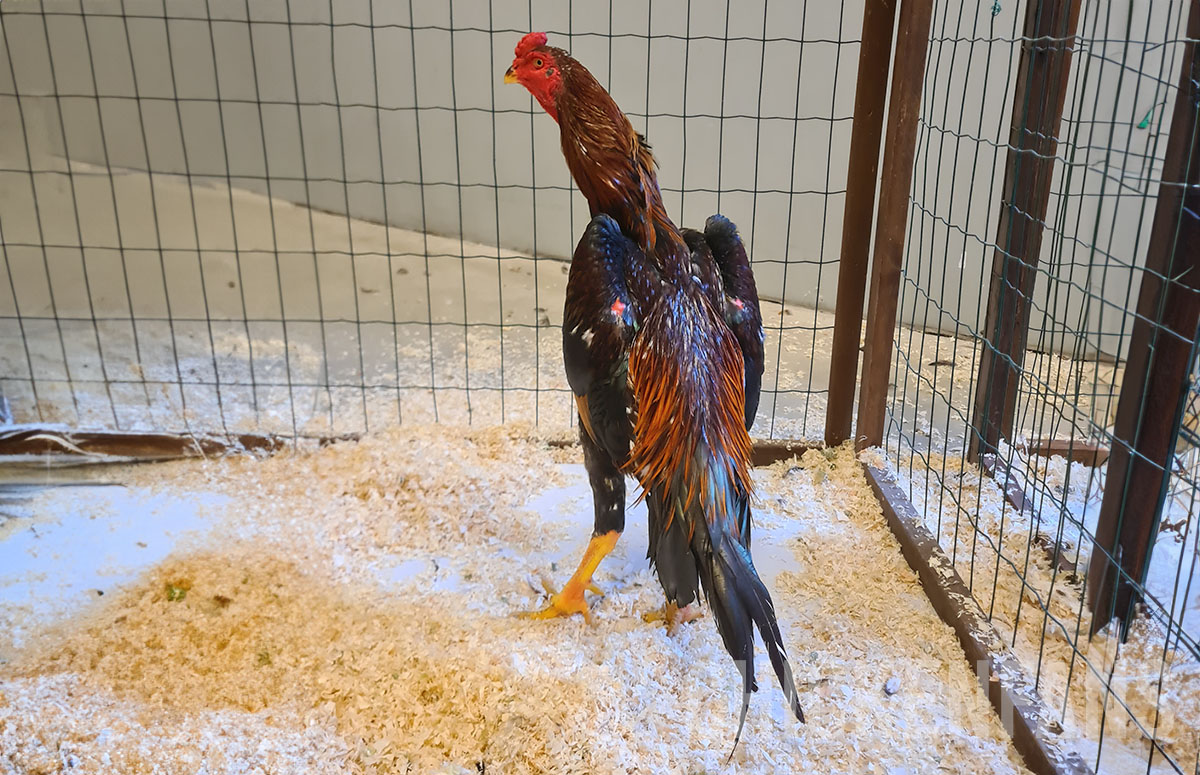
The Shamo is Japan’s towering, tight-feathered gamefowl. A fighting bird with a near-vertical stance, long thighs, wide chest, and a no-nonsense attitude.
In Japan, “Shamo” is really a group of fighting breeds. The full-size bird most folks mean is the O-Shamo, designated a Natural Monument in 1941.
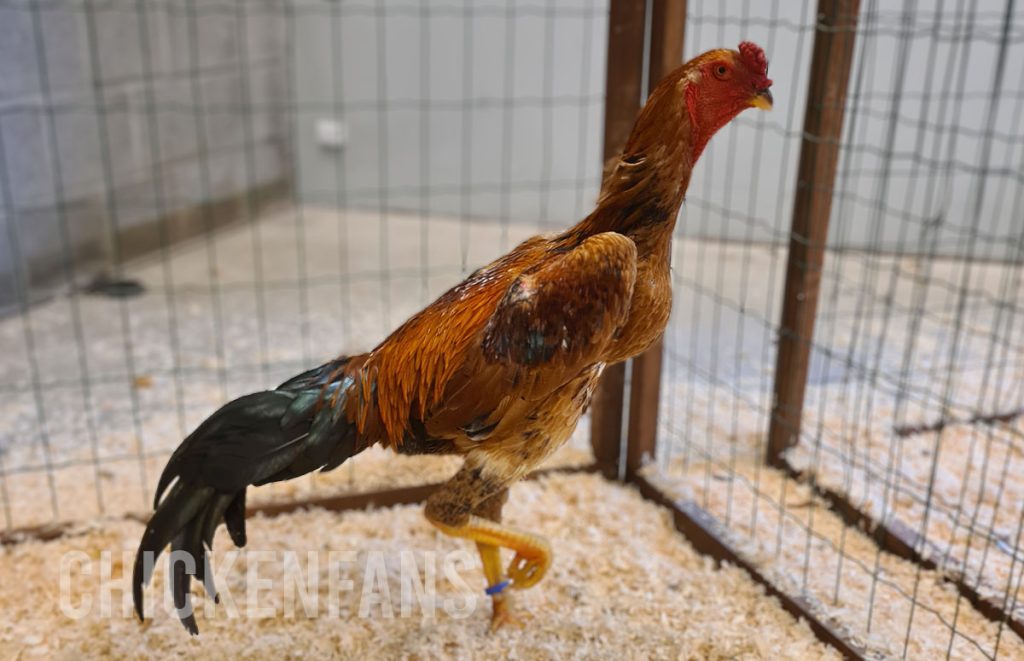
On type, they’re unmistakable: a bold head set on a long, slightly arched neck, pearl-colored eyes, tiny to absent wattles, and hard, close feathers that leave a small bare patch along the keel.
Some takeaways:
- Japanese gamefowl, likely routed from Siam/Thailand into Japan
- O-Shamo is the flagship and a Natural Monument since 1941
- Human-friendly but very combative with other chickens
- Built for naked-heel boxing: vertical carriage, domed skull for eye protection
- Three size classes in Japan
- Seven Shamo-group breeds are officially recognized
| Eggs | up to ~90 per year |
| Egg Color | Light brown |
| Egg Size | Medium to Large |
| Weight | Rooster 5.0–5.6 kg (O-Shamo); Hen 3.2–4.9 kg, depending on standard/line. The Japanese standard lists ~5,620 g cocks and ~4,875 g hens |
| Hardiness | Hardy; prefer space and simple, dry housing |
| Temperament | Calm with people but very territorial with other chickens |
| Beginner-friendly | No |
| Color | Black, black-breasted red/wheaten, white, blue, mottled – APA: Black, Dark, BB Red |
Characteristics
Stand one beside a layer and you’ll see why Shamo are all posture.
They’re high-stationed birds with long thighs and long, yellow shanks (dark birds may show black shanks with yellow soles), a long slightly arched neck, and a compact tail that hangs a bit rather than fanning out.
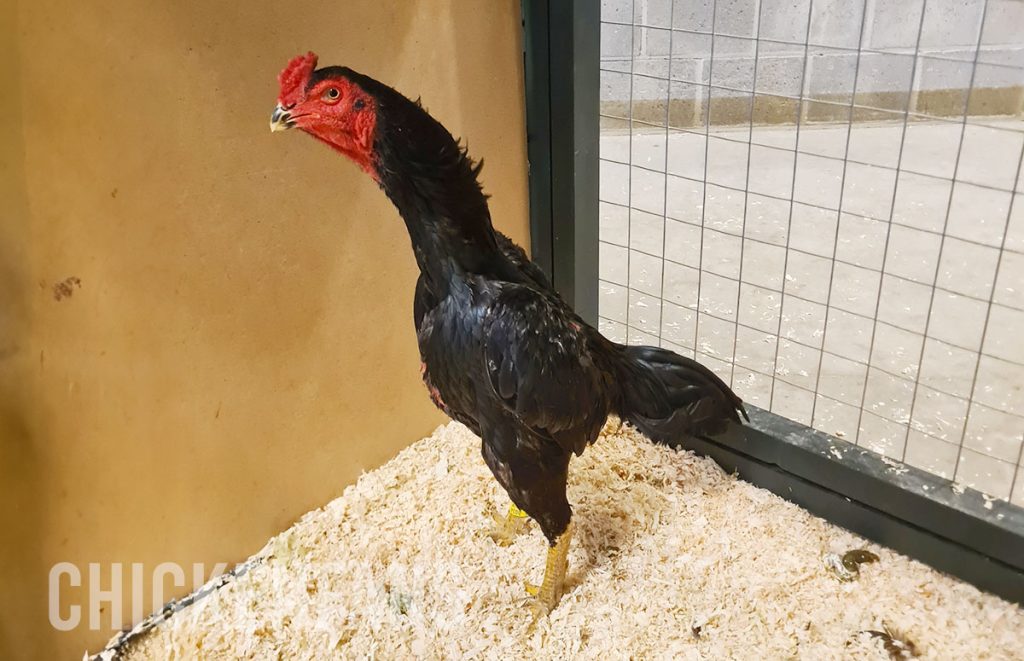
The head is broad and their domed skull and deep brow ridge shield some beautiful pearl-colored eyes. They have a pea comb, and the earlobes are small and red. The wattles are tiny in roosters and typically absent in hens. Feathers are short, hard, and glued to the body, a protective armor that also leaves a small bare patch along the keel.
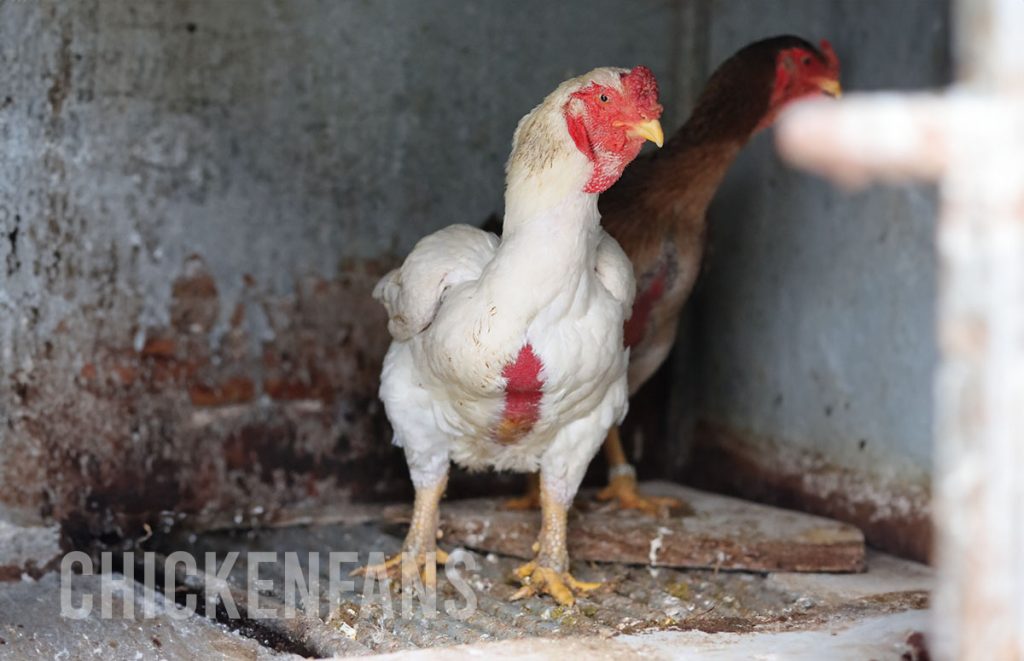
The classic Japanese description of a Shamo explicitly mentions the bare keel area where red skin shows through. In the Ko Shamo photo above the bare keel is hard to miss.
Name
Outside Japan we casually say Shamo, but Japanese sources use Shamo as a category of fighting fowl and O-Shamo for the big standard bird.
If you’re reading older European texts, you’ll also see that the first imports were simply called Shamo, which muddies the waters. (The Dutch Kippenencyclopedie mentions Germany received the first Shamos around 1880.)

Egg Production
You’re not getting Leghorn numbers here. Expect roughly 60–90 eggs a year in light brown. Hens tend to be devoted mothers.
Because these are big, heavy birds, some lines can crush eggs if the nesting space is cramped, so give them some roomy nesting boxes with proper bedding.
Personality
Around people, many Shamo chickens are steady and almost dog-calm.
Around other chickens, different story!
Roosters will fight. Dominance is the only thing that counts. Given the chance, they’ll keep going until one bird gives out. Put a Shamo in with a regular backyard rooster and he’ll make short work of him, you’ll be down a bird.
Even the hens can be pushy!
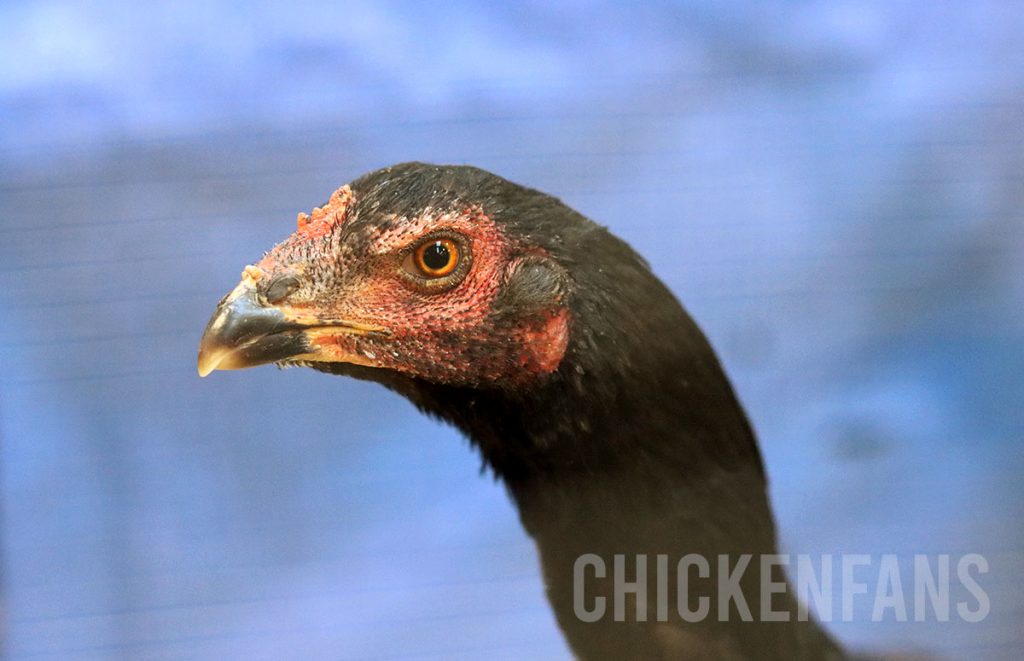
Best practice is to keep one rooster per coop, together with his hens. Use high fencing (they’re not big flyers), and plenty of run space. A Dutch husbandry note even suggests keeping them pairwise. They’re virtually monogamous. If you do run multiple hens, provide several shelters so lower-ranked birds can retreat.
Colors
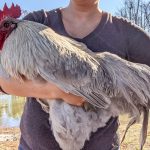
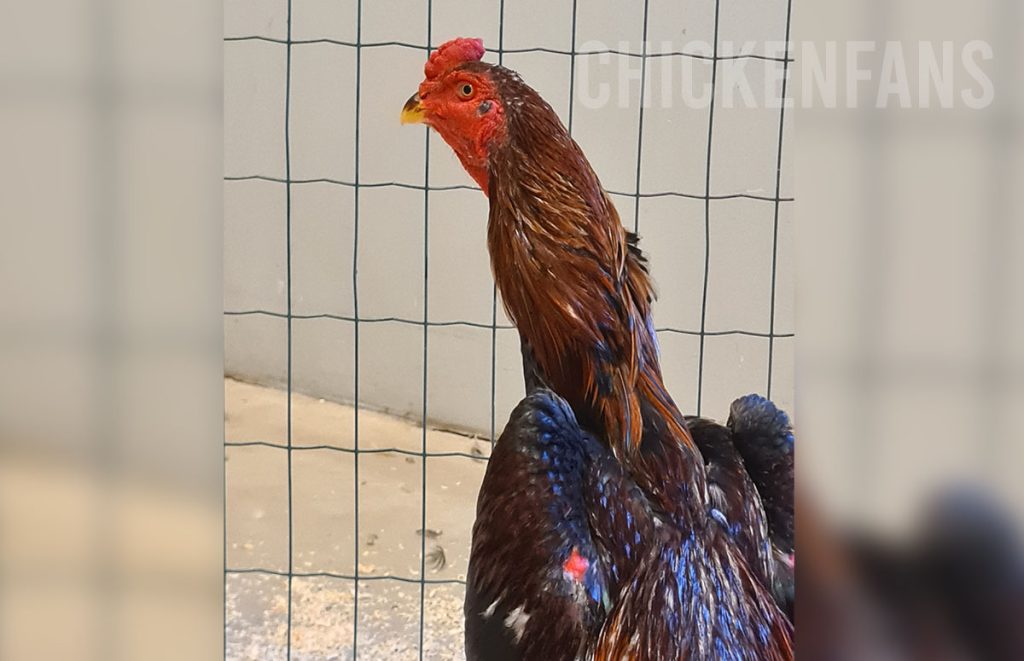
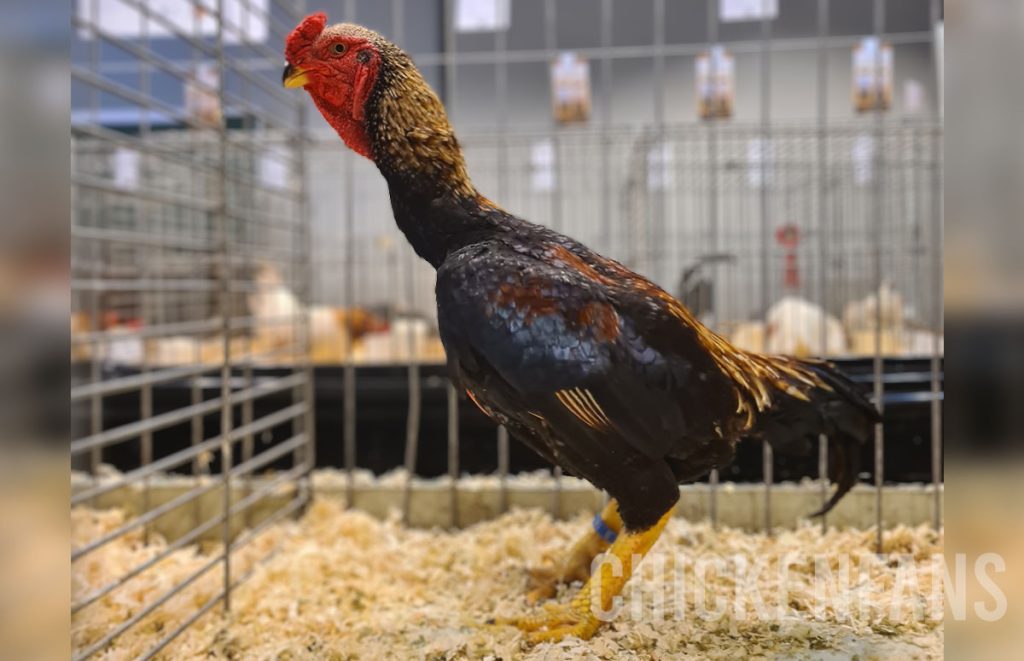
Color-wise, O-Shamo come in more than just black and red. The Japanese standard allows black-breasted red (classic BBR, as in the photo below), solid black, white, mottled, blue, silver duckwing, and buff Columbian (always with yellow shanks and a pea comb).
On the shows, all those color varieties make head-to-head judging tricky, classes get thin and apples-to-apples comparisons turn into which paint job do you prefer?
Type always beats paint: saturated pigment is the goal, not flashy fluff.
Classic BBR roosters wear rich mahogany hackles and saddle over a black breast and tail, while hens run wheaten to partridge shades. Silver duckwing swaps the gold for clean silver.
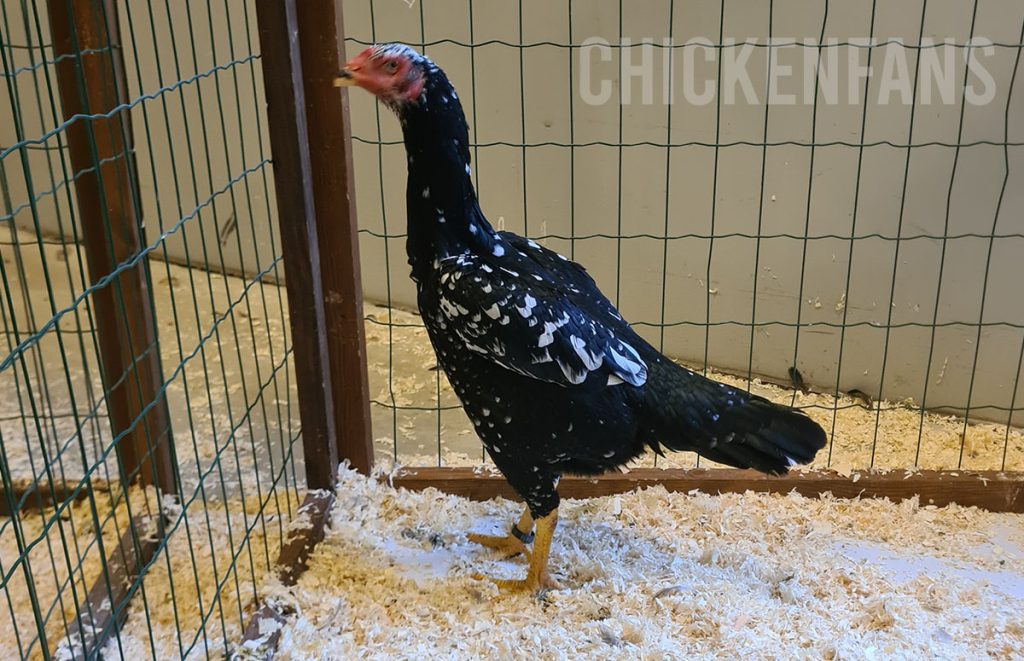
Mottled birds show white ticking that can increase with age, and whites should be crisp with minimal straw. If you want the classic Shamo look, go BBR, but black and white lines are common and dead simple to match across a flock.
History
Origins run through Southeast Asia. Most accounts trace the ancestor stock from Siam/Thailand into Japan in the early Edo period (that was around 1603–1867, the shogun resigned in ’67, and the Meiji Restoration formally began in ’68).
In Japan, Shamo became the umbrella for the naked-heel fighting types, with O-Shamo as the large standard.
The breed was protected by law in 1941, reflecting its cultural value.
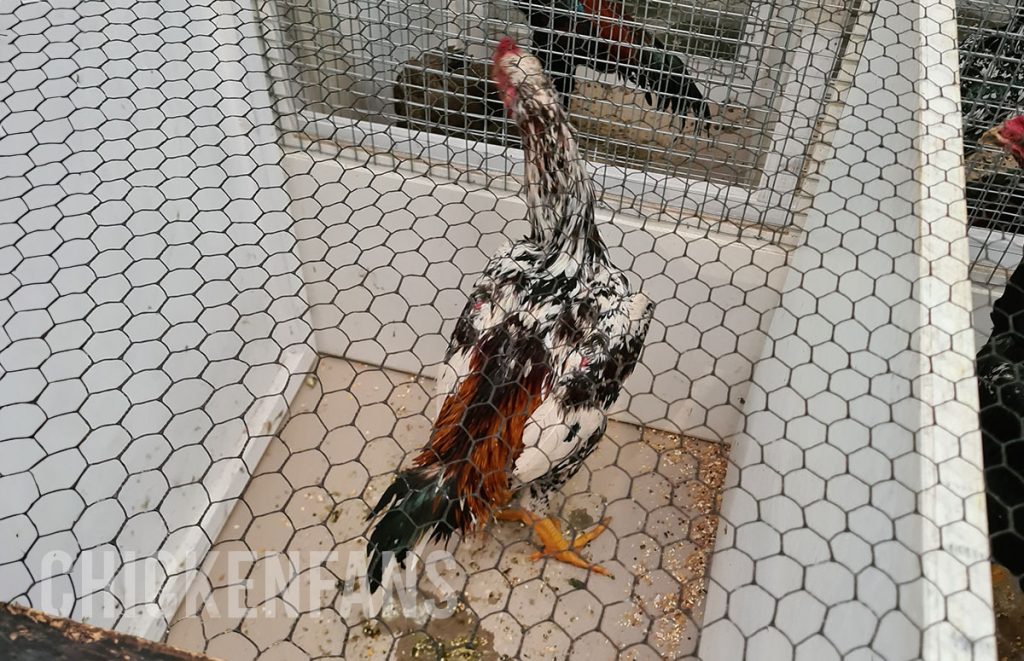
In the late 19th century Germany imported birds (recorded by European fanciers), and after WWII GIs carried Shamo back to the U.S., where the APA standards accepted them in 1981.
Two uniquely Japanese points worth knowing:
- Foundation status: Modern Japanese fancy breeds were largely built from three roots: Jidori (old native types), Shoukoku, and O-Shamo, which tells you how influential the Shamo has been in the archipelago’s chicken tree
- Meat quality genetics: Because O-Shamo meat is prized, prefectural institutes have used it (along with Satsuma-Dori and Hinai-Dori) as a sire line to create tastier local meat chickens
Types of Shamo
In Japan, “Shamo” is an umbrella, not a single breed.
Japanese breeders slot them into three size classes: O-Shamo (large), Chu-Shamo (medium), and Nankin-Shamo (bantam).
On top of that, seven Shamo-group breeds are officially recognized (and protected as Natural Monuments): O-Shamo, Chu-Shamo, Nankin-Shamo, Ehigo-Nankin-Shamo, Kinpa, Takido, and Yamato-Shamo.
In Western writing, Shamo usually means the full-size O-Shamo.
The U.S. APA treats the birds simply as Shamo (the full-size bird, effectively O-Shamo) and only recognizes color varieties, not those Japanese size/breed splits. In the APA, Shamo were admitted in 1981 with varieties like Black, Dark, and Black Breasted Red (Wheaten).
Genetics
Microsatellite work in Japan clusters Ko-Shamo (small game) closely with O-Shamo. There is genetic evidence that they’re intimately related.
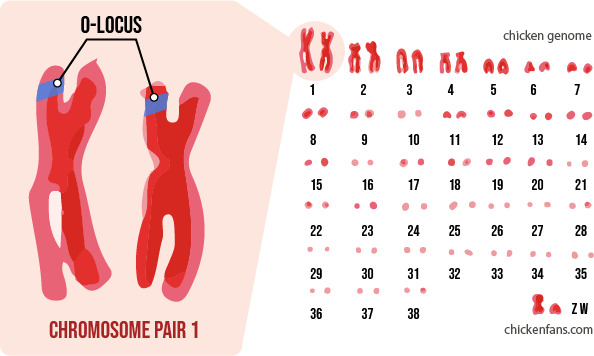
Some authors even propose Ko-Shamo as a dwarf form of O-Shamo (Osman, Sekino, et. al – Genetic Variability in Journal of Poultry Science, 2006).
For context, they note this contrasts with an earlier blood-protein study by Okabayashi, Kamiya & Tanabe, which did not find the two breeds closely related.
Summary
If you like tall, statuesque birds with a storied past, the Shamo is your bird. Give them space, simple sturdy housing, and strict flock management (one rooster per group).
In return you get a living piece of Japanese culture: bold outline, tight feather, pearl eyes, and a breed that helped shape much of Japan’s poultry scene.
If you want to find out more about Japanese game fowl breeds, check out our articles on the Yamato Gunkei chicken, the Shamo, the Kyshiu Chibi, the Yakido, the Shoukoku chicken, or the Ko Shamo.