Chicken Egg Anatomy
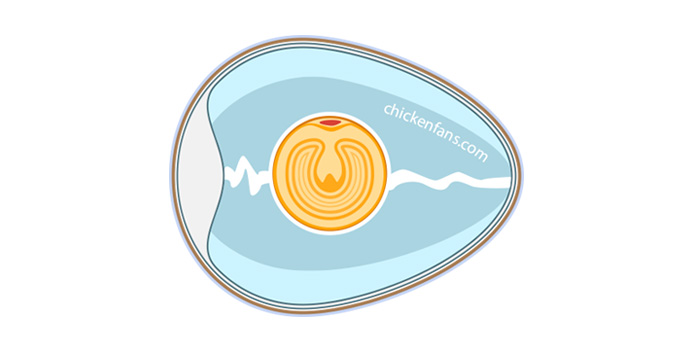
A chicken egg is much more complex than it might seem at first glance. It’s a complete ecosystem that consists of many smaller parts working together.
After all, the egg is the vessel where the embryo of a chick develops during incubation.
Let’s dive into the anatomy of the egg.
Eggshell
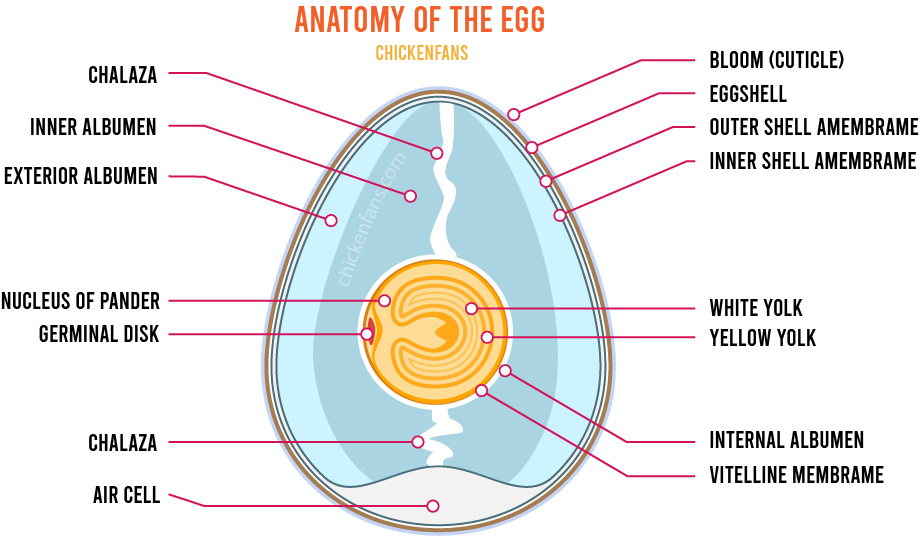
The outside of the egg has a protective hard shell made almost entirely out of calcium carbonate and minerals. The shell itself consists of multiple layers that are built on top of a fibrous shell membrane.
Although it’s not visible to the naked eye, the shell is porous, and a medium-sized domestic hen’s egg has about 7000 pores. The pores allow gases to transfer through the shell so the embryo can breathe. Oxygen is coming in through the shell, and CO2 is going out.
Bloom
The bloom is a noncalcified layer that sits around the shell to protect it. In scientific literature, it’s called the cuticle since the calcium crystallizes as nanosphere cuticles.
The bloom, or cuticle, protects against:
- microbial infections and infiltration of bacteria
- harmful radiation sunlight
- water and rain
The bloom keeps the eggs fresh in the nesting box. That’s why it’s best not to wash your eggs, as washing removes the protective layer.
Shell color
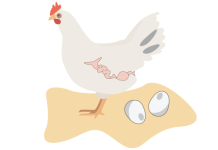
It takes about 20 hours to develop the eggshell in the chicken’s uterus or shell gland. That’s also where the color pigments are added to the shell.
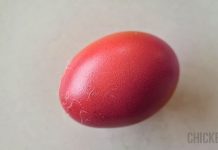
Shells can have brown or blue pigments. Brown eggshells are white on the inside as the pigment covers the shell like a layer of paint. A lack of pigments results in a white shell. A blue shell with a brown coating results in an olive color. The bloom can give the egg a pinkish shine.
Shell color is determined primarily by genetics. We have written an in-depth explanation of eggshell color genetics.
Shell Membranes
Inside the eggshell, two membranes contain the egg’s albumen (egg white). The outer membrane is the base layer of the eggshell. The inner membrane sticks to the albumen.
In a fresh, warm egg, the membranes are fitting closely together. The hard shell stays in shape when the egg cools down, but the contents shrink. This creates an air cell on the bottom of the egg. When the egg ages and the embryo breathes, oxygen enters the shell, and the air bubble grows.
Albumen
About 70% of the egg consists of albumen or egg white. The albumen itself is 90% water, mixed with proteins and some minerals and vitamins. The albumen does not contain any cholesterol.
The albumen is composed of multiple proteins and forms thick and thin layers around the yolk. These proteins can survive for months in cold storage. When the egg ages, the composition of the proteins shifts, and the thick albumen gets thinner over time. That’s why older eggs are runny and quickly spread across the pan, while fresh egg white stays firm near the yolk.
The inner layer around the yolk is the internal albumen or chalaziferous albumen. It’s a dense layer of fibrous proteins that sits around the vitelline membrane and attaches to the chalaza.
Chalaza
The chalaza is a structure inside the egg that keeps the yolk in place. It consists of two spiral bands of protein fibers. There are two chalazae in an egg, one on the bottom and one on the top of the egg.
The structure is present in all eggs, whether they are fertilized or not. The chalaza is not the sperm of the rooster. It’s also not the umbilical cord or the chicken’s embryo, and it’s perfectly safe to eat.
Egg Yolk
The egg yolk resides in the vitelline membrane that separates the yolk from the albumen. It’s a protein barrier that prevents microbial infection. In fertilized eggs, this membrane recognizes sperm and binds it to the yolk’s surface.
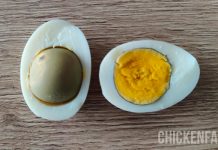
The yellow egg yolk contains most of the nutrients and is the primary food source for the embryo. It contains fat, proteins, cholesterol, minerals, and vitamins A, D, E, and K. It’s not uncommon to have eggs with a double yolk.
There are two types of yolk, white yolk and yellow yolk. When the yolk develops, the center of the yolk starts out as a white follicle. The darker yolk grows in layers on top. The yellow yolk contains more fat, whereas the white yolk contains more protein.
The center of the egg is connected via a column of white yolk to the Nucleus of Pander, which also consists of white yolk. This Nucleus of Pander is the place where the embryo develops.
Germinal Disk
The germinal disk or blastoderm is a tiny spot on the yolk’s surface. It’s the spot where the sperm attaches to the yolk. The germinal disk is the earliest stage of the embryo of a fertile egg.
The blastoderm is attached to the Nucleus of Pander. When the embryo grows, blood vessels grow from the blastoderm into the yolk to fetch nutrients. It’s the blastoderm that keeps growing during incubation to become a full-grown chick.